
Breastfeeding and your baby’s eczema risk: let’s talk about it.
If you’re pregnant (or your baby has eczema) and wondering what you can do to support your baby’s skin and immune health, you’ve probably already come across a lot of advice.
“Breastfeed.” “Take antibiotics.” “Avoid dairy.” “Try these voids but limit those.” And so on…
But let’s hone in on one part: the relationship between breastmilk, the gut, the immune system and eczema.
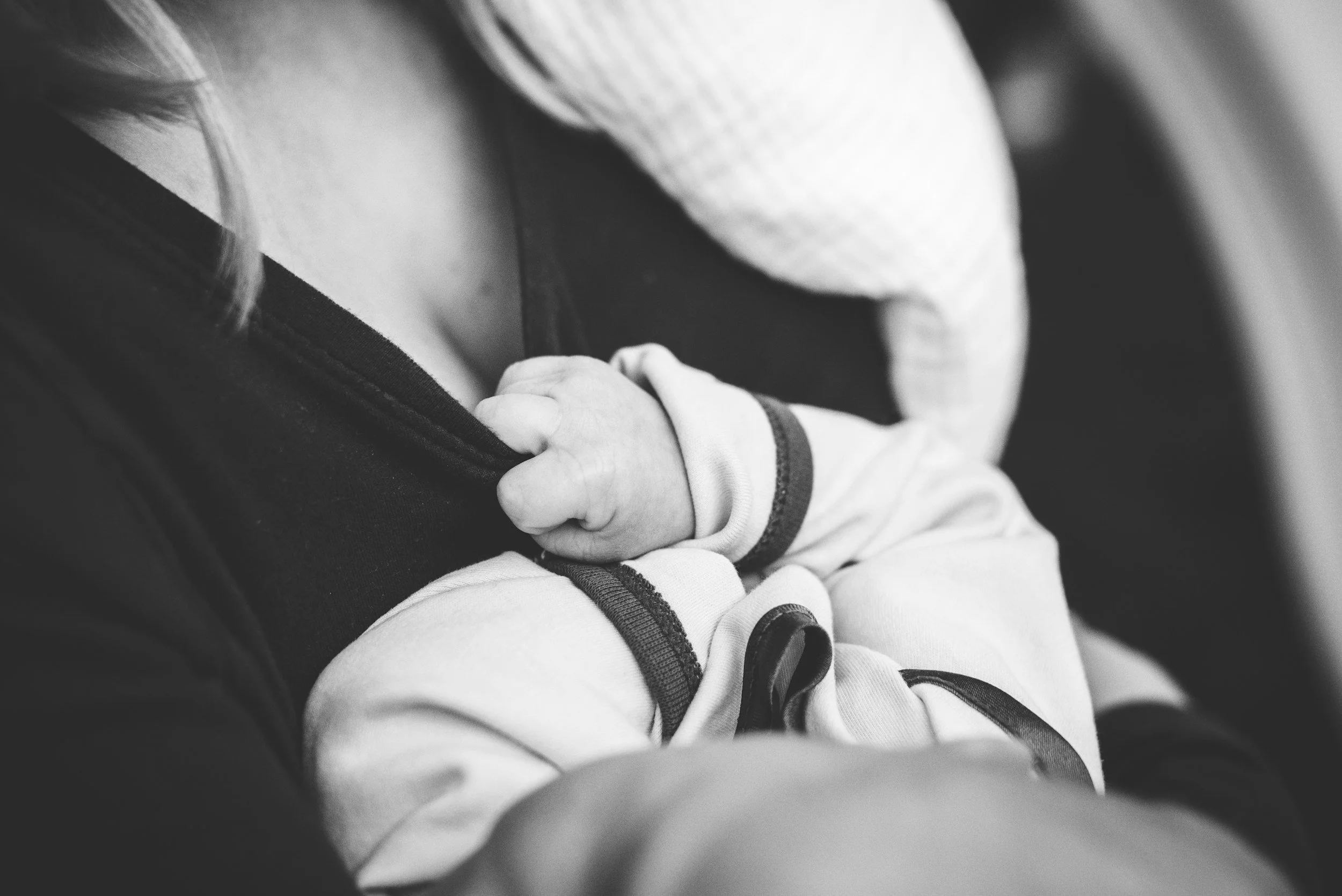
Does breastfeeding prevent eczema?
This is a little more complex than a simple yes or no.
Remember: eczema is influenced by many different factors, including genetics, immune function, skin barrier health and environmental exposure. But breastfeeding may play a positive role in some of the system involved in eczema development.
The most important of these is the gut microbiome
Breast milk isn’t just food.
We tend to think of breast milk as providing calories, protein, fats, vitamins and minerals.
And it does all of those things. But breast milk is much more than nutrition.
It contains hundreds of different bioactive compounds that interact with a baby's developing digestive and immune systems. One particularly fascinating group is called human milk oligosaccharides, or HMOs.
The important thing to know is that these are special carbohydrates found naturally in human milk that a baby doesn't fully digest.
And that's actually the point.
They're essentially food for particular beneficial bacteria in the baby's gut.
Breast milk helps feed the right bacteria
A baby's gut microbiome is developing rapidly during the first months and years of life. Breast milk contains HMOs that encourage the growth of bacteria such as Bifidobacterium, which are particularly well adapted to use these sugars.
Think of it a little like gardening. You don't just want lots of plants in your garden. You want to create the conditions that allow the plants you want to grow to thrive.
Breast milk provides some of those conditions for the developing infant gut. And as these bacteria use the HMOs, they produce substances that can interact with the gut lining and immune system.
This is one reason the microbiome is so interesting when we're talking about eczema and other allergic conditions.
The gut and immune system are closely connected
A huge proportion of the body's immune activity is associated with the gastrointestinal tract. And in a newborn, the immune system is still learning.
It needs to work out:
What's dangerous? What's harmless? What should I react to? What can I tolerate?
The developing gut microbiome is part of this education process.
Research suggests that gut microbes can influence the development and regulation of immune responses, and differences in early-life gut microbiota have been associated with allergic sensitisation and eczema.
Breast milk contains not only HMOs, but also immune-active components that can interact with this developing system.
So rather than thinking about breast milk as simply "feeding the baby", it's more accurate to think of it as helping create an environment in which the baby's gut and immune system can develop.
And then there's the gut lining...
Your digestive tract isn't simply a long tube where food goes in and nutrients come out. The gut lining acts as a barrier between what's inside the digestive tract and the rest of the body. That barrier needs to be strong, but it also needs to be carefully regulated.
HMO’s and their metabolites have been shown to interact with intestinal epithelial cells and support aspects of intestinal barrier development and function.
In simple terms?
Breast milk helps support the environment where the gut lining and digestive system are developing.
And because the gut lining, microbiome and immune system are all communicating with one another, supporting one part can influence the others.
But here’s the important bit you need to know and remember.
If your baby wasn't breastfed—or breastfeeding wasn't possible—please don't read this article and blame yourself if your baby has eczema.
Please don't. Eczema is not caused by one thing. And breastfeeding is not a magic shield against eczema.
A baby's early-life microbiome is influenced by a whole range of factors, including genetics, environment, feeding, medications, birth circumstances and microbial exposures. Caesarean birth and antibiotic exposure, for example, can influence the developing infant microbiome, although the relationship is complex and doesn't mean that one particular birth method or antibiotic exposure determines a child's health.
And then there's Mum. The mother's own microbiome and health are part of the bigger picture too.
There is an incredible amount of microbial exchange between mother and baby around pregnancy, birth and early life. But again, this is a complex relationship—not a simple case of "Mum has good gut bacteria, therefore baby won't get eczema."
So where does that leave you?
For me, this is exactly why personalised care matters.
When I'm working with a baby or child with eczema, I'm not interested in finding one thing to blame.
I'm interested in understanding the whole picture.
Because two babies can have exactly the same eczema diagnosis and arrive there through very different combinations of factors.
What you can do is focus on supporting your own health and nutrition, getting appropriate help when you need it, and remembering that your baby's eczema is not a reflection of whether you did everything "right".
And if you need help figuring it out, thats where I come in.
Book yourself (or your baby) in for a free initial assessment and let’s talk about how I can support you and your child on this journey.
You don’t have to work it all out alone.
Belinda xx